Last Updated: April 13, 2026
TL;DR — The Integration Verdict
All-in-one units (from brands like EG4, Growatt, or Victron) are the current standard for DIY off-grid installations because they save hours of labor and reduce the risk of wiring errors. They are cost-effective and compact. But for a permanent homestead, you must weigh that convenience against reliability. If an all-in-one fails, your house goes dark. If you use individual components, you can bypass a failed controller and still run your lights. For most families, the solution is 'Parallel Redundancy'—using two smaller all-in-one units instead of one large one.
Are you looking at the 'Magic Box' that replaces a whole wall of gear?
It's $800, it’s clean, and it has one screen. It’s incredibly tempting. But before you bolt it to your wall, you need to understand the 'Integrated Trap.' This guide shows you why 'all-in-one' is great for most systems—but why you still need a backup plan for the day the magic box decides to stop working.
Table of Contents
Convenience vs. Repairability: The integration trade-off
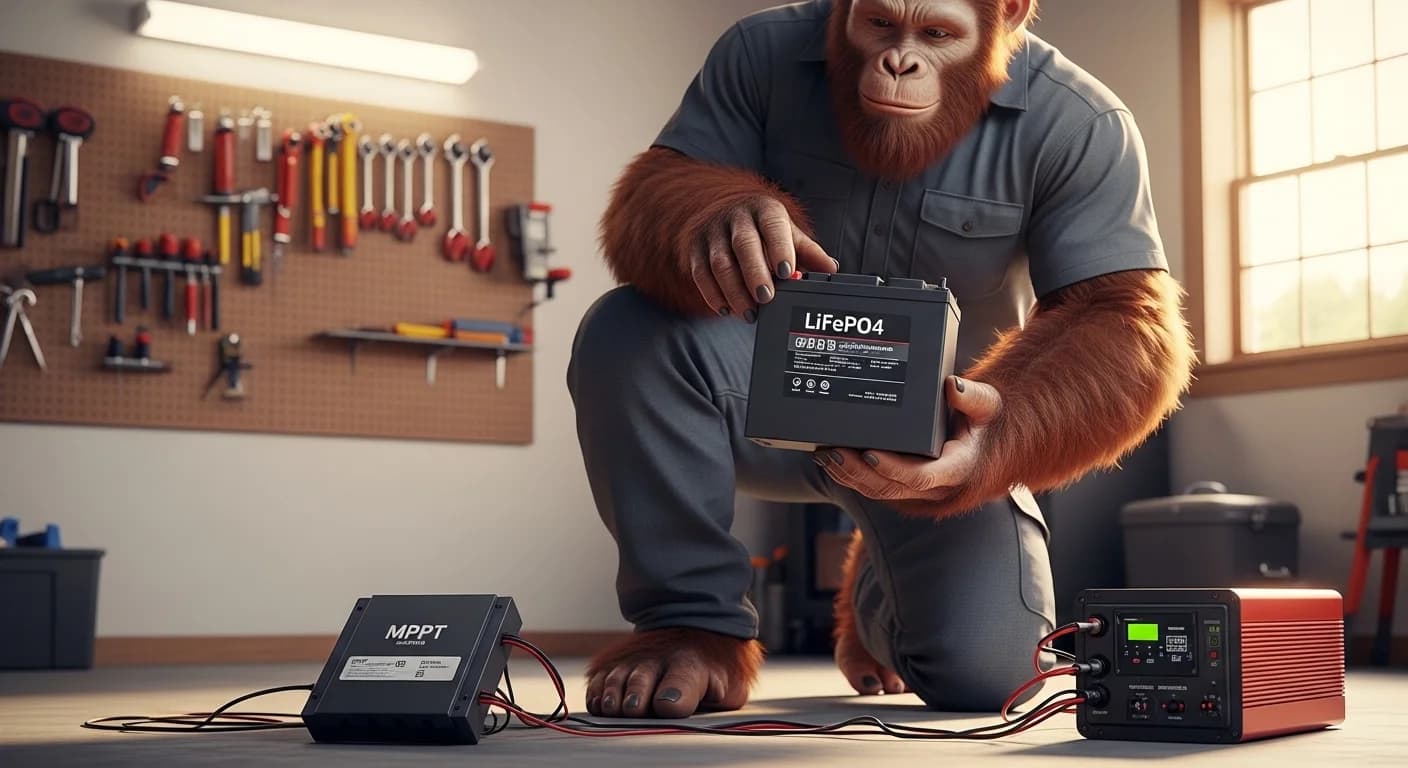
Individual components (Inverter separate from Controller) are "modular." If your charge controller dies, you can buy a new one for $200 and have it replaced in 15 minutes.
With an all-in-one solar inverter, the internal components are sharing a single circuit board. If a capacitor on the charger side blows, the whole 80-lb unit must be taken down and shipped back to a service center. Can your family survive for 3 weeks without power?
Wiring Simplicity: Reducing DIY error
This is the biggest pro. Wiring individual components requires thick cables, busbars, and complex fusing.
An all-in-one unit typically has:
- DC Input (Solar)
- DC Output (Batteries)
- AC Input (Generator/Grid)
- AC Output (Main Panel)
This reduces the number of connections by 60%, significantly lowering the risk of a loose crimp or a fire-starting arc fault.
Field reports from off-grid installers consistently show that all-in-one systems simplify wiring but concentrate heat in ways that modular builds avoid — worth factoring into your ventilation plan.
Heat Management: Managing three devices in one skin
When you combine an inverter (which generates heat) with a charge controller (which generates heat), you have a thermal challenge. All-in-one units rely heavily on internal fans.
Budget units use cheaper fans that are loud and prone to failure. If a $10 fan dies inside your all-in-one, it will shut down to protect itself. This is why location matters—put your all-in-one in a cool, well-ventilated space, not a cramped closet.
🦍 WATTSON'S INTEGRATION RULE: 'ONE IS NONE, TWO IS ONE.' "A client once asked me if they should get one 6,000W all-in-one unit or two 3,000W units. I told them: get the two. You wire them together in parallel. If one unit smokes, you lose half your power, but you still have lights, the well pump, and the fridge. If you buy the 6,000W 'Magic Box' and it dies, you're back to camping in your own house. Redundancy is the only way to sleep soundly off-grid."
The 'Single Point of Failure' Disaster
This is a risk most sales reps don't mention. If the display panel on your all-in-one dies, many units will not let you change settings or even start. If the AC charger stops working, your backup generator is useless. You are completely dependent on every single subsystem inside that box working perfectly.
Stop Guessing Gear Selection
The Solar Buyer Checklist includes the 'Wattson Reliability Filter' for the top 3 all-in-one brands. Don't be fooled by marketing — know the failure rates before you buy.
Get the solar buyer checklist →The homesteader in Idaho watching his winter production crater. The veteran in Michigan who refuse to be dependent on a grid that fails. The father in Tennessee who knows his family's safety depends on his gear. This guide is for them.
Frequently Asked Questions
Is an all-in-one solar inverter better than separate components?
It is better for ease of installation and space savings. However, separate components are better for redundancy and long-term repairability. If you are a beginner DIYer, an all-in-one unit is usually the best choice to avoid wiring errors.Can I use a generator with an all-in-one solar inverter?
Yes. Most all-in-one units have an 'AC Input' that can receive power from a generator or the grid. The unit will automatically use that power to charge your batteries and run your house when the solar panels aren't producing enough energy.What happens if my all-in-one solar inverter fails?
Typically, you will lose all AC power to your house. Because the charger and inverter are integrated, you cannot bypass one while keeping the other. This is why having a backup plan (like a small standalone backup inverter) is critical for homesteaders.Are all-in-one inverters louder than separate units?
Generally yes. Because three devices are packed into one box, they generate more concentrated heat, which requires more aggressive fan intervention. High-quality units use variable-speed fans, while budget units often have loud 'on/off' fans.Can I expand an all-in-one solar system?
It depends on the model. Many modern all-in-one units are 'stackable,' meaning you can buy a second unit later and wire it in parallel to double your power. If the unit is not stackable, you are limited to the wattage and solar capacity of that single box.Integration is great, until it isn't.
For 90% of off-grid cabins, the all-in-one inverter is a revolutionary tool that makes solar independence accessible and affordable. But you must respect the single-point-of-failure risk. If you are staying for the long haul, build redundancy. Buy two units. Have a backup controller. For most families, the solution is 'Parallel Redundancy'—using two smaller all-in-one units or upgrading to the best 48V inverters on the market for added industrial-grade reliability. When your power is the only thing standing between you and the cold, 'modular' mindsets win.
🦍 WATTSON ON MAGIC BOXES: "I love seeing these new units from EG4 and Victron—they've made my job so much easier. But I still carry a spare 100A charge controller in the back of my truck. Why? Because the sun doesn't care about your integrated warranty. If the magic box dies on a Friday night, I'm the one who has to make the lights come back on. Be your own backup."
You are the protector of your household's safety.
You didn't build this to be a struggle; you built it to be a sanctuary. Selecting a high-efficiency integrated setup is how you ensure that home runs smoothly, no matter the season. Trust the integration, but verify the redundancy.
"Have a question about a specific all-in-one model or a strange error code on your screen? Our AI Guide handles those troubleshooting specifics." Talk to Wattson's AI Guide →