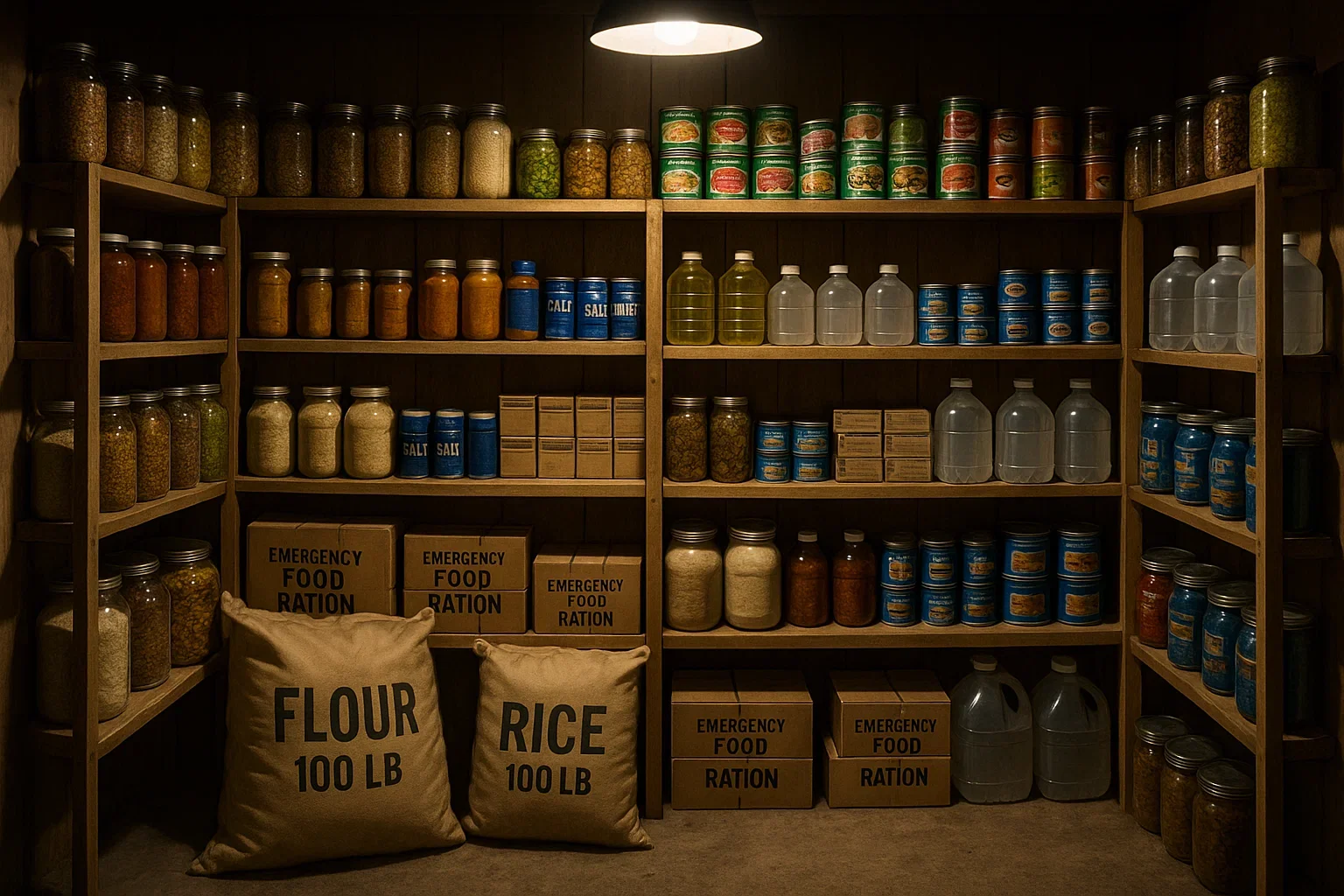
Long-term food storage is not buying extra cans on sale. It is buying the right calories, sealing them against five known enemies, and putting them somewhere cool enough that they outlast you. When trucks stop running — and they will, because they already have — you are either the family with rice or the family at the empty shelf. There is no third option. This is how you become the first one.
STOP GUESSING — CALCULATE YOUR PANTRY
How much rice does your family actually need for six months? How many five-gallon buckets? What size oxygen absorbers? Ask the AI Guide and get answers calibrated to your household size, climate, and storage location.
ASK WATTSON'S AI GUIDE →The Foods That Actually Last
Most of what people stockpile is not food storage. It is grocery shopping with anxiety. Canned soup expires in three years. Boxed pasta with sauce packets has oils that go rancid by year five. Anything with fat in it — peanut butter, brown rice, granola — is on a clock.
Real long-term storage means buying boring food. White rice. Dried beans. Whole wheat berries. Rolled oats. Pasta with no sauce. Salt and sugar that last forever. Honey that was already storing fine when the pharaohs ate it. These foods do not need refrigeration, do not need rotation every two years, and do not need you to remember they exist. You seal them once, you check them once a decade, and they wait for the day you actually need them.
Brown rice is not in that list for a reason. Same with whole-fat powdered milk and any nut. The oils inside them oxidize and go rancid in months. If you read a storage list and see brown rice on it, the writer is repeating something they read somewhere else. Stick to the white grains, the dried legumes, and the wheat berries. Those are what actually survive.
The Five Enemies of Stored Food
Every spoiled bucket I have ever opened was destroyed by one of these five forces, usually two of them working together:
- Oxygen — makes fats rancid, lets bacteria and insect eggs survive, degrades vitamins. This is the enemy you defeat with mylar bags and oxygen absorbers.
- Moisture — invites mold, bacteria, yeast. Even ambient humidity is enough. This is why basements with weeping walls destroy more food than any other location.
- Light — degrades vitamins, fades color, accelerates rancidity. Mylar bags and opaque buckets handle this. Glass jars on a shelf do not.
- Heat — the multiplier. Every 18°F increase roughly cuts shelf life in half. A 90°F garage destroys food eight times faster than a 55°F basement.
- Pests — weevils, pantry moths, rodents. They eat through cardboard, thin plastic, and bad seals. They cannot get through a properly sealed mylar bag inside a snap-lid bucket.
You defeat all five by sealing right and storing in the right location. Skip either step and you are not preparing — you are wasting money.
The Six-Step Process
This is the drill for dry goods. Rice, beans, oats, wheat, pasta, sugar, salt — all of them.
- Verify the food is dry. Moisture content above 10% will mold inside a sealed bag no matter what you do. If the grain feels cool or clumps when you squeeze it, dry it out first.
- Place a mylar bag inside a food-grade bucket. The bucket gives structure and pest protection. The bag is the actual oxygen and light barrier.
- Fill the bag with food. Leave two inches of headspace at the top for the seal.
- Drop in the correct oxygen absorber. A 5-gallon bucket of grain needs 2,000cc total. A 1-gallon bag needs 300cc. Work fast — once the absorber is exposed to air, you have about 30 minutes before it is spent.
- Heat-seal the mylar. Squeeze out the visible air, then run a hot iron or impulse sealer across the top. The seal should be wide, even, and pull-test strong.
- Lid the bucket, label with contents and date, and store. Black marker on white tape. Future you cannot identify mystery grain through opaque mylar.
Wattson recommends the standard 5-gallon mylar bag and oxygen absorber kit on Amazon →
Where You Store It Matters More Than How You Sealed It
I have seen perfect mylar work get destroyed in three months by bad location. Cool, dry, dark, stable temperature. Those four words decide whether you are storing food for 30 years or for one bad summer.
The best spots in a house: basement that does not flood, interior closet on a north wall, the space under the stairs, a dedicated pantry away from the kitchen heat. Anywhere the temperature stays between 50°F and 70°F year-round and the humidity does not climb above 60%.
The places that will destroy your investment: the garage (temperature swings from 30°F to 110°F), the attic (heat rises and food cooks), any basement with active moisture problems, anywhere with direct sun, and the kitchen cabinet next to the oven. If you cannot fix the location, the food does not go there.
For families without a good interior location, pairing storage with a controlled environment — root cellar, conditioned outbuilding, or a converted closet — solves the problem permanently.
[!IMPORTANT] OffGrid Power Hub earns a commission when you purchase through links on this site. We only recommend products selected through extensive research, verified manufacturer specifications, and field reports from off-grid families. Your price does not change.
Not building from scratch? My Patriot Supply's long-term food collection → ships pre-sealed buckets with 25-year shelf lives. Higher cost per pound, zero learning curve.
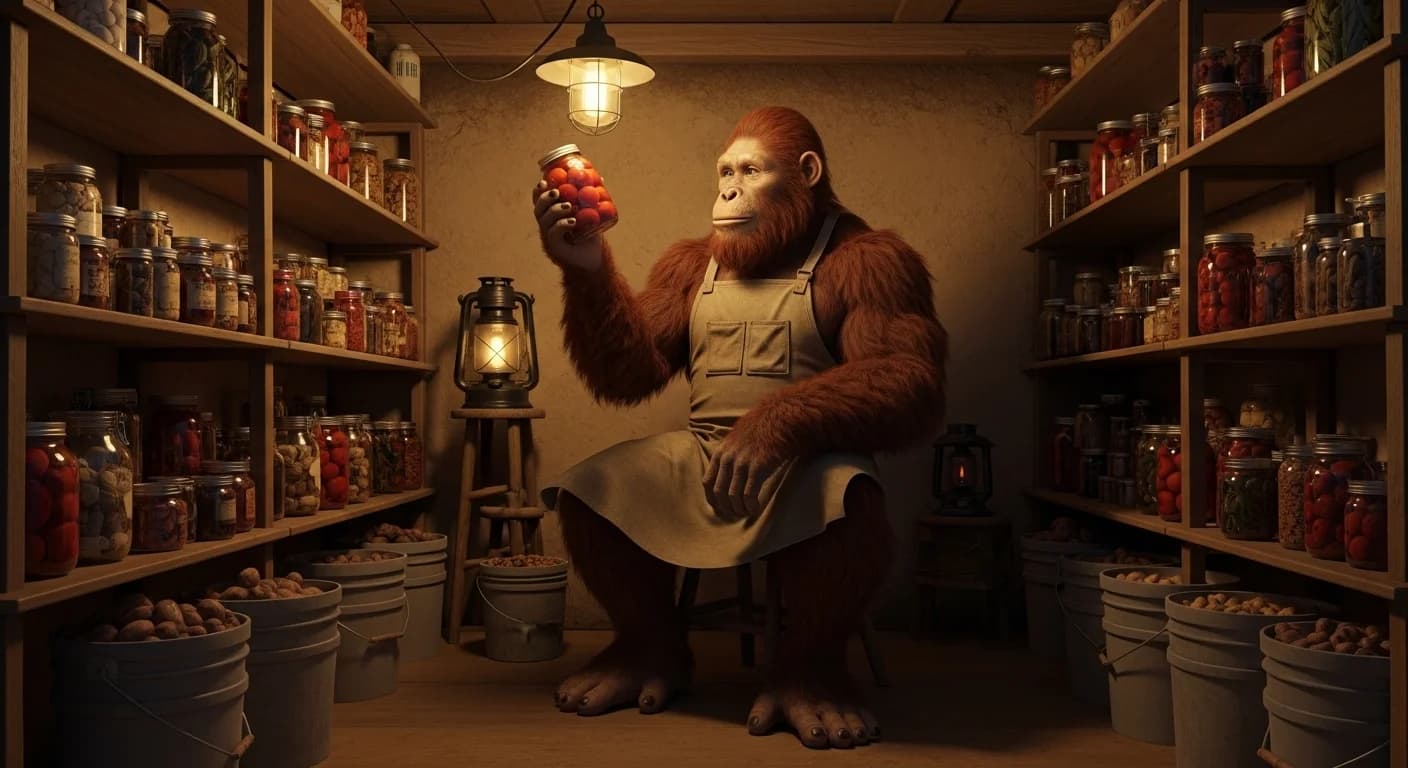
🦍 WATTSON'S WISDOM: THE BUCKET THAT OUTLASTED THE CABIN
"In 2014 I opened a five-gallon bucket of white rice I had sealed in 2011. The seal was perfect. The rice cooked the same as fresh."
Three years between sealing and opening, and there was no difference. Same hardness. Same cook time. Same taste. I had labeled the bucket "Rice - January 2011" with a black marker on white tape, and when I peeled the tape off the bucket lid still looked new.
That is what proper storage gets you. Not paranoia food. Not survival food. Just rice — calm, dry, dense, ready. Twelve years later that same bucket would still be fine because the seal was right and the closet stayed at 60°F. The contractor who built my first solar system warned me food storage was for "doomsday types." He went out of business in 2019 and called me asking about pantry advice in 2022.
Build the pantry before you need it. Open one bucket every year just to verify the work. The first time you eat rice you sealed five years ago and it tastes like rice you bought yesterday — that is when you understand the whole thing.
Frequently Asked Questions
How long does white rice actually last in mylar with oxygen absorbers?
Twenty to thirty years when stored below 70°F. The oxygen absorbers remove the residual air inside the sealed bag, which is what would otherwise let oils oxidize and insect eggs hatch. White rice has almost no oil content, which is why it stores so well. Brown rice has too much oil and starts going rancid in six to twelve months no matter how you seal it.
Can I store food in my garage?
No. Garage temperatures swing from below freezing in winter to over 100°F in summer. Every 18°F rise above 70°F roughly cuts shelf life in half. A 100°F garage destroys food eight times faster than a 70°F closet. Use an interior space with stable temperature, even if it means smaller storage capacity.
How much food do I actually need per person?
Plan on 2,000 calories per person per day minimum. For six months that is 360,000 calories per person. White rice provides about 1,650 calories per pound, dried beans about 1,600. One person needs roughly 120 pounds of rice and 60 pounds of beans for six months of staple calories. Add oats, pasta, sugar, salt, and powdered milk to fill out the rest.
Storage is not paranoia. It is arithmetic. White rice, dried beans, wheat berries, oats. Sealed against oxygen, moisture, light, heat, and pests. Stored cool and dark. The family that buys boring food and seals it right is the family that eats during the disruption everyone else is panicking through.
Last Updated: May 2026 | Author: Wattson | US Solar Institute Trained