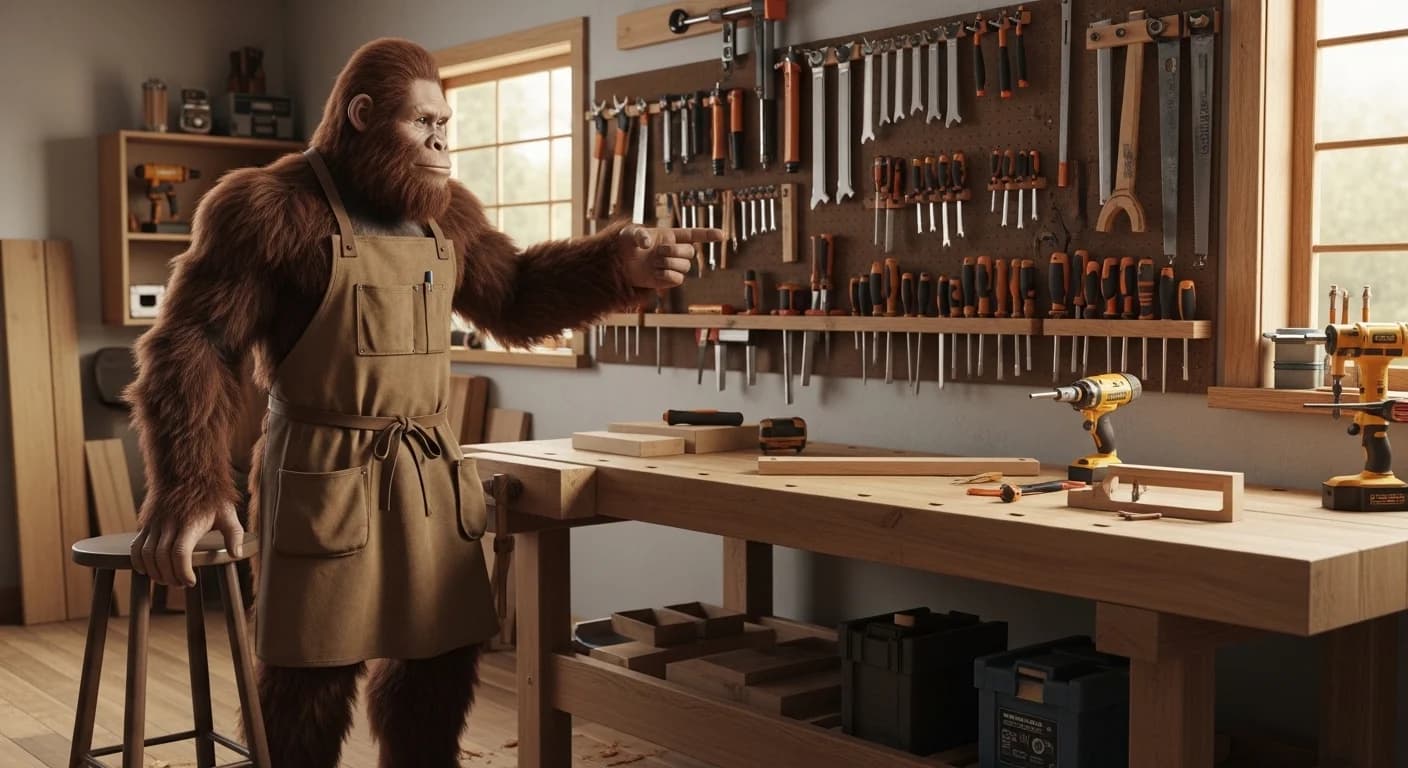
Rural Woodworking Skills: What You Need to Know Before You Fire Your Contractor
Town is 10 miles down a dirt road. Contractor takes three weeks to show up. Charges $150/hour when he finally arrives. Your property needs work now. Rural woodworking skills mean you handle it yourself.
This rural woodworking skills guide comes from painful experience. I paid a contractor $15,000 for work he botched. Had to tear it out myself. Redo everything from scratch. That disaster taught me one lesson: learn the skills or pay the price. Now I build everything on my property. Every shed. Every repair. Every improvement. These rural woodworking skills save money and sanity.
The Contractor Problem on Remote Property
Here's the math that changes everything. Contractor shows up. Charges $150/hour minimum. Drives 45 minutes from town. That's $75 in travel before he touches a tool.
Simple cabinet repair? Three-hour minimum. Hang a door? Half-day rate. Fix the porch railing? Block out two days. He's "squeezing you in" between real jobs.
Total cost for work you could do yourself: $400-800 per visit. Multiply by every repair your property needs. Numbers get ugly fast.
But the real cost isn't money. It's dependency. Every call admits you can't handle your own infrastructure. You're living rural but thinking suburban.
The $15,000 Lesson That Built My Rural Woodworking Skills
I hired a "professional" for my solar installation. Paid $15,000 upfront. He installed panels on the wrong roof angle. Used undersized wiring throughout. The system couldn't power my electric kettle.
Contractor disappeared. Money gone. I had two choices. Give up or get trained.
I flew to Florida. Enrolled at US Solar Institute. Learned everything they'd teach. Came home. Ripped out the failed system. Built my own from scratch.
That disaster changed my entire approach to property maintenance. I stopped calling for help. Started learning every rural woodworking skill I could. Built every shed, every repair, every improvement myself.
The skills I developed from that disaster saved ten times what I lost. Fire the contractor before he costs you more than money.
June's note: The men who built homesteads didn't have contractors on speed dial. They had skills, tools, and willingness to figure things out. That's what self-reliance actually looks like. Rural woodworking skills separate people who live on their land from people who camp on it.
Essential Rural Woodworking Skills for Self-Reliance
Not talking about building fine furniture here. Talking about practical rural woodworking skills. Skills that keep remote property running. Skills that eliminate phone calls.
Joinery Fundamentals
Every piece of furniture relies on joints. Every door frame. Every structural connection. Master mortise and tenon for furniture repairs. Learn dado joints for shelving. Understand pocket screws for fast connections.
Repair and Restoration
Most property maintenance is fixing what's broken. Tighten loose furniture joints. Patch damaged wood. Replace rotted sections. Rehang doors that stick. These repairs need the right techniques, not expert skills.
Structural Framing
Outbuildings, additions, porches, chicken coops. Every structure follows the same framing principles. Learn wall framing and roof trusses. One skill set applies to dozens of projects.
Door and Window Installation
Doors and windows fail constantly on rural properties. Weather exposure. Settling. Age. Know how to hang a door properly. Understand window rough openings. These skills eliminate the most common contractor calls.
Cabinet and Storage Building
Storage is infrastructure on a working property. Workshop cabinets. Pantry shelving. Tool organization. Basic cabinet-making lets you build exactly what you need at material cost only.
"Moved to 40 acres in Montana. Nearest contractor worth a damn is 90 minutes away. First year I called for everything. Second year I started learning. Third year I built a 400 square foot workshop myself."
Dave R., Rural Montana Rancher
Rural Woodworking Skills with Off-Grid Power Limits
YouTube woodworkers don't tell you this. Their shops run on unlimited grid power. Your solar system doesn't care about their table saw recommendations.
A 15-amp table saw draws 1,800 watts running. Startup surge hits 3,600 watts or more. That's your entire solar system for one tool. Most off-grid setups can't handle it without careful management.
The Battery Tool Revolution
Modern battery tools changed everything for off-grid builders. DeWalt FlexVolt. Milwaukee M18 FUEL. Makita XGT. These systems deliver near-corded performance. Charge batteries during peak sun. Work whenever you want.
See our Essential Tools Guide for specific recommendations.
Strategic Corded Tool Use
Some jobs still need corded tools. Run them midday when solar peaks. Plan heavy-draw work for sunny days. Keep a generator for shop days. Manage loads, don't fight them.
Hand Tools Are Primary Equipment
Hand tools aren't backup. They're primary equipment. A sharp hand plane doesn't care about battery level. Japanese pull saws cut cleaner than most circular saws. Chisels work in power outages. Build skills around tools that never need charging.
Priority Tools for Rural Woodworking Skills
Tool acquisition matters when town is an hour round trip. Buy quality once. Prioritize versatility over specialization. Build your shop around multi-task tools.
Tier 1: The Non-Negotiables
Quality circular saw. Cordless drill/driver combo. Speed square and tape measure. Bar clamps (at least four). Wood glue and basic fasteners. Hand saw for when power isn't available. This kit handles 70% of woodworking tasks.
Tier 2: Expanded Capability
Router with basic bit set. Jigsaw for curves. Random orbit sander. Chisel set (1/4", 1/2", 3/4", 1"). Block plane. Combination square. These open up furniture and finish work.
Tier 3: Shop Infrastructure
Table saw when power supports it. Miter saw for accurate crosscuts. Drill press for precision holes. Workbench you build yourself as a skill-building project. Dust collection if your lungs matter.
The Hand Tool Foundation
Japanese pull saw cuts on the pull stroke. More control, thinner kerf. Hand plane flattens surfaces without electricity. Marking gauge ensures consistent measurements. These tools work in any conditions. They teach fundamentals power tools can't.
Check our Complete Tools & Equipment Guide for detailed recommendations.
"Retired Army, bought land in the Ozarks. Didn't know a mortise from a dado when I started. The plans system walks you through everything. Built my chicken coop, then a storage shed, then helped the neighbor with his deck. Skills compound."
Jim T., Rural Arkansas Homesteader
Project Progression: Building Rural Woodworking Skills
Don't start by building a barn. Start by fixing what's broken. Each project builds skills for the next level.
Phase 1: Repair Skills
Fix loose furniture joints. Rehang sticking doors. Repair cabinet hinges. Patch damaged trim. Replace rotted deck boards. Small wins build competence. Mistakes cost a few dollars, not hundreds.
Phase 2: Utility Projects
Build sawhorses. You'll use them forever. Construct a proper workbench. Make storage shelves for the shop. Build a tool tote. These practice joinery while creating infrastructure you need.
Phase 3: Furniture Building
Simple bench first. Then a basic table. Progress to chairs with more complex joinery. Build storage cabinets. Each piece teaches techniques that transfer to the next.
See our 15 High-Profit Woodworking Projects for income-generating ideas.
Phase 4: Structure Construction
Small shed or chicken coop first. Then larger outbuildings. Covered porch or deck. Eventually additions or new structures. By this phase, you understand framing, roofing, and finishing. You're not calling contractors. You ARE the contractor.
June's note: Nobody tells you this about building skills. They compound. Learn accurate joints and furniture repair makes sense. Build one shed and you understand every shed. Frame one wall and framing clicks forever. The guys who stay dependent never start. The guys who get free started with one small project and kept going.
Winter Workshop Considerations
Cold weather changes everything about woodworking. Plan for it or spend four months unable to build.
Temperature and Glue
Wood glue fails below 50°F. Titebond III needs minimum 47°F. Keep glue inside the house. Warm joints before gluing. Plan glue-ups for warmer parts of the day.
Battery Performance
Lithium batteries lose capacity in cold. Keep batteries warm until use. Store them inside overnight. Cold batteries discharge faster and charge slower. Hand tools don't care about temperature.
Honest Pros and Cons
Pros
Eliminate contractor dependency completely
Save $400-800 per project on labor
Work on your schedule, not theirs
Skills compound across every project
Turn skills into income with projects that sell
Cons
Initial tool investment required
Learning curve on early projects
Off-grid power limits some tools
Winter workshop challenges
Takes time away from other property work
Frequently Asked Questions
What rural woodworking skills do I need for off-grid living?
Essential skills: joinery, furniture repair, structural framing, door installation, cabinet making. Start with repairs. Progress to construction as confidence builds.
Can I run power tools off-grid with limited solar?
Yes, but carefully. High startup currents strain small systems. Use battery tools for most work. Run heavy-draw tools during peak sun hours.
What basic tools should I have for remote property?
Priority: circular saw, cordless drill, hand plane, chisels, Japanese pull saw, measuring tools, bar clamps, wood glue. Hand tools work when power fails.
How do I learn woodworking without access to classes?
Comprehensive plan systems provide step-by-step instructions with detailed diagrams. Start with simple repairs. Practice joints on scrap. Progress to furniture builds.
What projects should off-gridders tackle first?
Start with repairs: loose joints, sticking doors, cabinet hinges. Then utility projects: sawhorses, workbench. Progress to furniture, then construction.
Related Resources
- Off-Grid Tools & Equipment Guide — complete tool inventory for property independence
- DIY Homestead Building Projects — hands-on builds for the off-grid property
- Off-Grid Hand Tools Foundation — non-powered tools every property owner needs
The Bottom Line
The contractor dependency is a choice. Every skill you build is money you keep and a problem you can solve at 11pm on a Sunday without waiting three weeks.
Start with one project. Fix one thing yourself. The skill compounds from there.