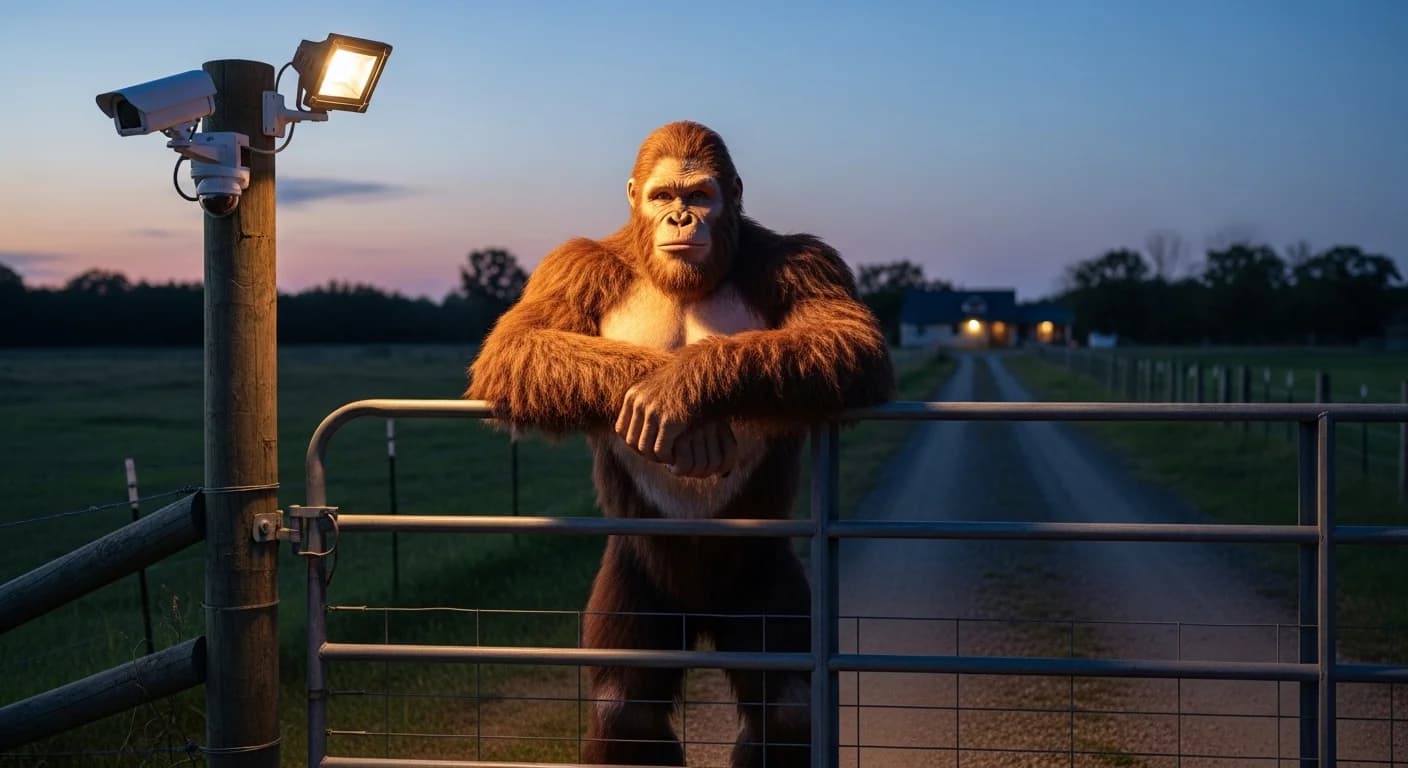
Situational Awareness: The Free Security Layer That Works Before Any Hardware Does
The camera catches what already happened. The lock slows down what is already in motion. Situational awareness is what stops both before they start.
I learned this living rurally with response times that made the police a last resort, not a first response. You cannot outsource awareness. You either build it or you do not have it.
This guide covers the system that works — the color codes, how to read anomalies, and how to build the habit without turning yourself into a paranoid wreck.
Situational awareness is the practiced habit of knowing what is normal for your environment so that anything abnormal registers immediately. It costs nothing. It requires no hardware. It works at home, in town, and in every situation where a camera or lock cannot help you. The color code system is the fastest framework for building it.
Why Situational Awareness Matters Now
Situational awareness is your first line of defense. You've hardened the doors. Installed security cameras. Added motion lights. Good. But what about your brain? That built-in alarm system Mother Nature provided?
Most people wander through life oblivious. Heads buried in phones. Completely tuned out. Easy targets. Walking victims waiting to happen.
Situational awareness isn't spy stuff. Not special forces tactics. It's simply paying attention to what's happening around you. Processing information. Recognizing when something's wrong. Seeing the predator before it pounces.
⚠️ The Oblivious Majority
Studies show 90% of people are unaware of surroundings. Phone addiction makes it worse. Criminals know this. They hunt distracted prey. Don't be easy pickings.
In an unstable world, oblivion is dangerous. Potentially fatal. Time to switch from autopilot to manual. See the world as it is. Not as you wish.
The Color Codes of Situational Awareness
Security professionals use color codes for alertness. Simple system. Easy to remember. Your goal: escape Condition White. Live in Condition Yellow.
Condition White: Unaware
Head in phone. Music blasting. Completely oblivious. This is where victims live. Easy target zone.
Status: Vulnerable to any threat
Condition Yellow: Alert
Relaxed but observing. Noticing surroundings. Scanning for anomalies. Not paranoid. Simply aware.
Status: Protected, prepared
Condition Orange: Specific Alert
Something triggered concern. Specific person or situation. Preparing potential response. Exit planning.
Status: Threat identified, ready
Condition Red: Action
Threat confirmed. Response engaged. Fight, flight, or defensive action. No hesitation.
Status: Active engagement
How to Practice Condition Yellow
- Phone down, head up: Put the device away in public spaces
- Scan environments: Quick mental snapshot entering any space
- Identify exits: Know escape routes in every room
- Establish baselines: What's normal here? Normal sounds? Normal people?
- Spot abnormal: Heavy coat on hot day. Car circling repeatedly. Sudden silence.
Spotting Anomalies: Reading People and Places
Once you're actually looking, what are you seeking? Hunt for things that don't fit. Things that ping your radar. Not judging people. Observing behavior and context.
Threat Indicators to Watch
👀 Out of Place Objects
Abandoned backpack in crowd. Ladder at neighbor's window. Car blocking driveway. Objects that don't belong.
🚶 Suspicious Behavior
Loitering without purpose. Trying too hard to blend. Excessive attention on you. Moving against traffic flow.
🖐️ Watch the Hands
Concealed hands are danger signs. Fidgeting nervously. Reaching into clothing. Hands tell intentions.
👁️ Read the Eyes
Scanning exits. Sizing people up. Avoiding contact unnaturally. Target fixation on you or valuables.
🧍 Body Language
Tense posture. Exaggerated movements. Making themselves larger or smaller. Pre-attack indicators.
🔊 Environmental Changes
Sudden crowd mood shift. Unexpected silence. Normal background noise stopping. Something changed.
✅ Trust Your Gut
That primitive brain is wired for threat detection. If something feels wrong, pay attention. Your subconscious catches cues your conscious mind misses. Don't dismiss instincts as paranoia. Investigate or create distance.
Situational Awareness at Home Base
Awareness isn't just for public spaces. Critical for defending your property. Your castle needs alert guardians.
Arrival Routine
- Scan before exiting car: Anything different? Gate open? Window askew?
- Check for unfamiliar vehicles: Strange car parked nearby?
- Don't walk into ambush: If something feels off, don't enter
- Vary your routine: Unpredictable arrival times frustrate surveillance
Know Your Normals
- Street sounds: What does normal sound like at night?
- Neighbor patterns: Who walks dogs when? What cars park where?
- Wildlife behavior: Birds suddenly silent? Something spooked them.
- Dog alerts: If your dog growls at nothing, investigate cautiously
Perimeter Awareness
- Regular property walks: Look for tampering or unusual signs
- Check windows and doors: Any marks? Attempted entry?
- Monitor vegetation: Bushes provide concealment for intruders
- Know sight lines: Where can someone hide on your property?
⚠️ Neighbor Network (Carefully)
If you trust neighbors, share observations. "Notice that van parked all day?" Shared intel helps everyone. But trust your gut on who to include. Not everyone deserves your confidence.
The Baseline Audit: What "Normal" Actually Looks Like On Your Property
Color codes only work if you know what you're comparing against. Most people skip this step and wonder why "yellow" never triggers for them.
Spend one week doing this, once a day, no more than five minutes:
- Sound baseline. Stand in your driveway at the same time each day. What do you actually hear? Traffic pattern, neighbor's generator, dogs, birds. Write down what's normal for that hour.
- Vehicle baseline. Which vehicles pass your property regularly, and roughly when? The mail carrier, the neighbor's truck, the school bus. A vehicle you don't recognize, moving slower than the rest, is the first real signal — not a threat by itself, just a data point.
- Animal baseline. If you have livestock, dogs, or even just birds nesting nearby, their behavior is a free alarm system. Note how they normally react to the mail carrier versus a stranger. A sudden break in that pattern — dogs going quiet instead of barking, birds scattering from a tree line — is worth noticing.
- Ground baseline. Walk your own perimeter once. Note the tire tracks, footpaths, and disturbed ground that are already there from your own normal activity. That way, new disturbance actually stands out instead of blending in.
This isn't paranoia. It's the same audit a tracker does before reading sign — you can't recognize "different" until you know "normal."
Three Scenarios Worth Practicing This Week
Reading about awareness doesn't build it. Rehearsing specific moments does.
Scenario 1 — The unfamiliar vehicle. A car you don't recognize is parked at the end of your driveway, engine off, no one visible walking up. What's your baseline response? Not panic — just: note the vehicle (color, make, plate if visible), note the time, continue what you were doing while staying aware of the vehicle's position. Most of the time it's someone turning around or checking a map. The habit is noticing without escalating.
Scenario 2 — The unexpected visitor at the door. Someone you don't know is at your door, unannounced. Before opening: what does their body position tell you? Are they facing the door directly, relaxed, holding something visible (a clipboard, a delivery box)? Or angled away, hands not visible, looking past you into the house? The color-code shift from yellow to orange happens here, before a single word is exchanged.
Scenario 3 — The pattern break. Your dog, who always barks at the mail carrier, goes completely silent one afternoon when someone's walking near the property line. That's not nothing. It doesn't mean call the police. It means: go to orange, locate the source, confirm what changed. Most of the time it's the mail carrier running late in an unfamiliar vehicle. Occasionally it's the thing the whole system exists to catch.
Awareness is Layer 1. Here's what covers the rest.
Situational awareness catches what's abnormal — but it can't stop a weak gate, a rusted hasp, or a camera aimed at nothing useful. The free Property Security Vulnerability Assessment maps the layers awareness alone can't cover.
Map Your Full Security Picture →The Situational Awareness Daily Checklist
Print this or screenshot it. Five checks, every day, until they're automatic:
- Did I notice anything today that didn't match my baseline (sound, vehicle, animal, ground)?
- Am I currently at white, yellow, orange, or red — and does that match what's actually happening around me?
- Did I walk my own perimeter, or only see it from inside the house?
- Would I recognize an unfamiliar vehicle's color, make, and approximate time if asked an hour from now?
- Did I let my phone or a task pull me to white when I should have stayed at yellow?
Awareness isn't a skill you master once. It's a habit you either practice daily or lose within a week of not practicing it — the same way physical fitness fades faster than it was built. That's the whole reason it belongs at the top of this pillar, before any hardware conversation starts.
June's note:
Situational awareness costs nothing but attention. Most powerful security tool you own. Criminals fear alert targets. They seek oblivious prey.
My rule: Phone goes away in parking lots. Head stays up approaching doors. I scan every environment I enter. Takes seconds. Could save my life.
Combine awareness with physical security. See our Home Hardening Guide for complete protection.
Building Your Situational Awareness Skills
This is a skill. Not magic. Takes conscious effort initially. Becomes automatic with practice. Like driving. Eventually second nature.
Daily Practice Techniques
- Mental narration: Describe surroundings to yourself. "Guy in red shirt, hands in pockets. Blue sedan, occupied. Exit to my left."
- Play spot-the-anomaly: Deliberately look for things slightly off wherever you go
- Count exits: Make it a habit to identify all exits in every space
- People-watch purposefully: Observe body language at restaurants, stores, anywhere
Reduce Vulnerability
- Vary routes: Don't be predictable in daily movements
- Limit distractions: Headphones in public reduce awareness dramatically
- Position strategically: Sit facing doors. Back to wall. See who enters.
- Travel in daylight: When possible, avoid isolated areas after dark
✅ Start Small, Build Habits
Don't try to be hyper-vigilant immediately. Pick one technique. Practice until automatic. Then add another. Small consistent improvements beat burnout.
Frequently Asked Questions
What is situational awareness?
Situational awareness means observing your environment, processing what you see, and recognizing when something is wrong. Noticing threats before they become emergencies. Costs nothing but attention.
What are the color codes of awareness?
White: Unaware and vulnerable. Yellow: Relaxed but alert (your goal). Orange: Specific threat identified. Red: Active threat engagement. Live in Yellow to stay protected without paranoia.
How do I improve situational awareness?
Put phone away in public. Scan environments when entering. Establish baselines of normal. Notice anomalies. Trust gut instincts. Practice mental narration. Vary daily routes.
What are signs of a potential threat?
Loitering without purpose. Excessive attention on you. Hands concealed or fidgeting. Movement against normal flow. Sudden environmental changes. Objects out of place.
Why should I trust my gut instinct?
Your subconscious processes thousands of subtle cues consciously missed. That "bad feeling" often results from detecting micro-expressions, body language, or environmental anomalies. Evolution wired this system. Trust it.
Related Security Resources
- Rural Property Security System — layered security for properties with long response times
- Home Security Tech Overview — cameras, sensors, and monitoring for off-grid properties
- Off-Grid Security Hardening Guide — the full pillar covering every layer of rural security