Last Updated: April 13, 2026
TL;DR — The Sound of Cheap Power
You didn't move off-grid to listen to a jet engine in your mechanical room. Cheap high-frequency inverters generate a high-pitched whine and use small, loud fans that run 24/7. High-quality low-frequency inverters are silent for 90% of their operational life, only activating their fans under extreme loads. If your current inverter is humming loud enough to hear through a wall, it is likely suffering from "magnetostriction" or a failing capacitor.
Is your power system louder than the wind outside?
You’re sitting in your living room, trying to enjoy the silence of the woods, and all you can hear is the whirrr of your budget inverter. You thought it was a deal. Now, it’s a distraction. This guide explains why it’s happening and how to choose 'the quietest' gear for your next upgrade.
Table of Contents
Transformer Hum: The 60Hz Magnetostriction Problem
Every inverter uses a transformer to step up the battery voltage. As current passes through the magnetic core, the iron physically shrinks and expands in a process called magnetostriction.
In high-quality inverters (like Victron or SMA), the cores are "vacuum-impregnated" with resin to lock the components in place. In budget inverters, the core is loose. That 60Hz vibration becomes a literal speaker, humming loudly day and night.
Fan Logic: Why cheap inverters never stop screaming
A "high-frequency" inverter is small and light. Because it doesn't have a large mass to absorb heat, it must move air constantly to keep its transistors from melting.
Small fans have to spin faster to move the same amount of air as a large fan. High RPM equals high noise. A high-quality inverter will be 15-20 pounds heavier because it uses its aluminum casing as a heat sink, allowing the fans to stay silent for everything but the highest power loads. This is a hallmark of high-quality pure sine wave inverters, which prioritize thermal management to protect sensitive electronics.
Budget high-frequency inverters run loud enough to notice in a small cabin — low-frequency units run significantly quieter, which matters more than most buyers realize until they are living with the system.
Coil Whine: The high-pitched electronic scream
If your inverter makes a sound like a dog whistle, that's coil whine. This is caused by the switching frequency of the transistors.
While not always a sign of failure, it is a sign of "loose" manufacturing. Better engineering places these switching frequencies outside the human hearing range (ultrasonic). If you can hear it, the component is likely under-damped and vibrating at its resonant frequency.
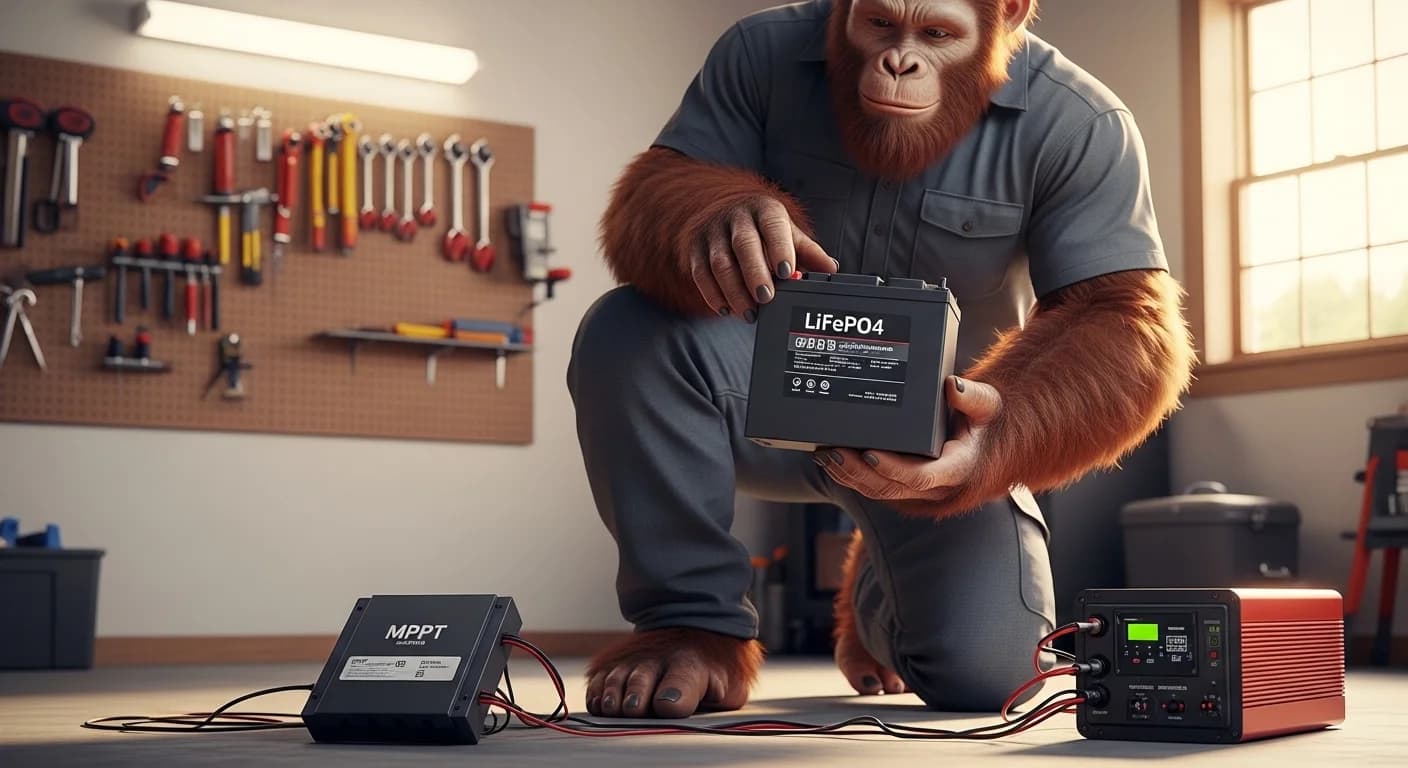
🦍 WATTSON'S NOISE RULE: 'HEAVY IS SILENT.' "I've set up hundreds of systems. Whenever a client asks for a 'quiet' system, I tell them to buy the heaviest one they can find. Weight is a sign of huge copper transformers and massive aluminum heat sinks. Those things don't vibrate, and they don't need small, screaming fans. Silence is heavy. Remember that when you're looking at the shipping weight."
Low Frequency vs. High Frequency: The noise gap
- Low Frequency (LF): Heavy, uses large transformers, silent hum, large slow-spinning fans. Recommended for main cabins.
- High Frequency (HF): Light, no large transformers, high-pitched fan noise, constant 'whirring.' Recommended for sheds or non-living spaces only.
Stop Guessing Gear Sound
The Solar Buyer Checklist includes the 'Wattson Noise Specs' for the top 5 off-grid inverter brands. Don't be surprised by the scream — know the dB rating before you buy.
Download the buyer's checklist →Quiet by Design: Top Silent Inverter Brands
If silence is your priority, look at Victron Energy (MultiPlus/Quattro) or OutBack Power. These units are built for marine and residential applications where the mechanical room is often right next to the bed. They prioritize thermal efficiency so the fan is the last resort, not the first line of defense.
The homesteader in Idaho watching his winter production crater. The veteran in Michigan who refuse to be dependent on a grid that fails. The father in Tennessee who knows his family's safety depends on his gear. This guide is for them.
Frequently Asked Questions
Why is my off-grid inverter humming so loudly?
Humming is usually caused by the magnetic vibration of the transformer inside. This is normal to some degree (60Hz hum), but if it's loud enough to be heard through walls, it's a sign of a low-quality 'loose' transformer core or a system struggling with an unbalanced AC load.Can I quiet my solar inverter by adding insulation?
You should NEVER wrap an inverter in insulation. Inverters generate significant heat and require airflow. If you block the vents, the inverter will overheat and potentially catch fire. If you must use soundproofing, use an acoustically lined cabinet with active, large-diameter intake and exhaust fans.Is more noise a sign of inverter failure?
Sometimes. If the noise is a new 'grinding' sound, a fan bearing is failing. If the hum suddenly gets much louder, an internal capacitor may be failing or your load has exceeded the inverter's capacity. Check your AC loads and inspect the fans for dust buildup.Why does my inverter fan run when nothing is on?
Cheap inverters have high 'idle draw' and generate heat just by being on. In a small, light inverter with no large heat sinks, the fan must run even for small 50W loads to prevent hotspots. Premium inverters can often run up to 500W without ever turning on a fan.Which is the quietest off-grid inverter?
The Victron MultiPlus series is widely considered the quietest in the industry due to its massive passive cooling capacity and intelligently controlled variable-speed fans that stay off during typical nighttime loads.Peace isn't just about the grid.
You didn't go off-grid to build an industrial plant inside your home. Inverter noise is a symptom of component selection. When you choose heavy, high-quality, low-frequency gear, you aren't just getting a better inverter—you are getting the silence you moved to the woods for. Invest in the heavy gear, such as the top-rated 48V inverters used by serious homesteaders. Reclaim your sleep.
🦍 WATTSON ON ROOM PLACEMENT: "The best way to silence an inverter is to put it in a insulated shed 20 feet from the house. If you have to put it under your stairs, spend the extra money on top-tier gear. Every dollar you 'save' on a cheap inverter will be a dollar you'd pay months later just to have the humming stop."
You are a provider for your family's peace.
You didn't build this to be a struggle; you built it to be a sanctuary. Selecting the right components is how you ensure that home is as quiet as it is independent. Trust the weight, not the price tag.
"Have a question about a specific hum or a fan that's driving you crazy? Our AI Guide handles those troubleshooting specifics." Ask the AI guide →