TL;DR -- The 90-day stockpile build plan
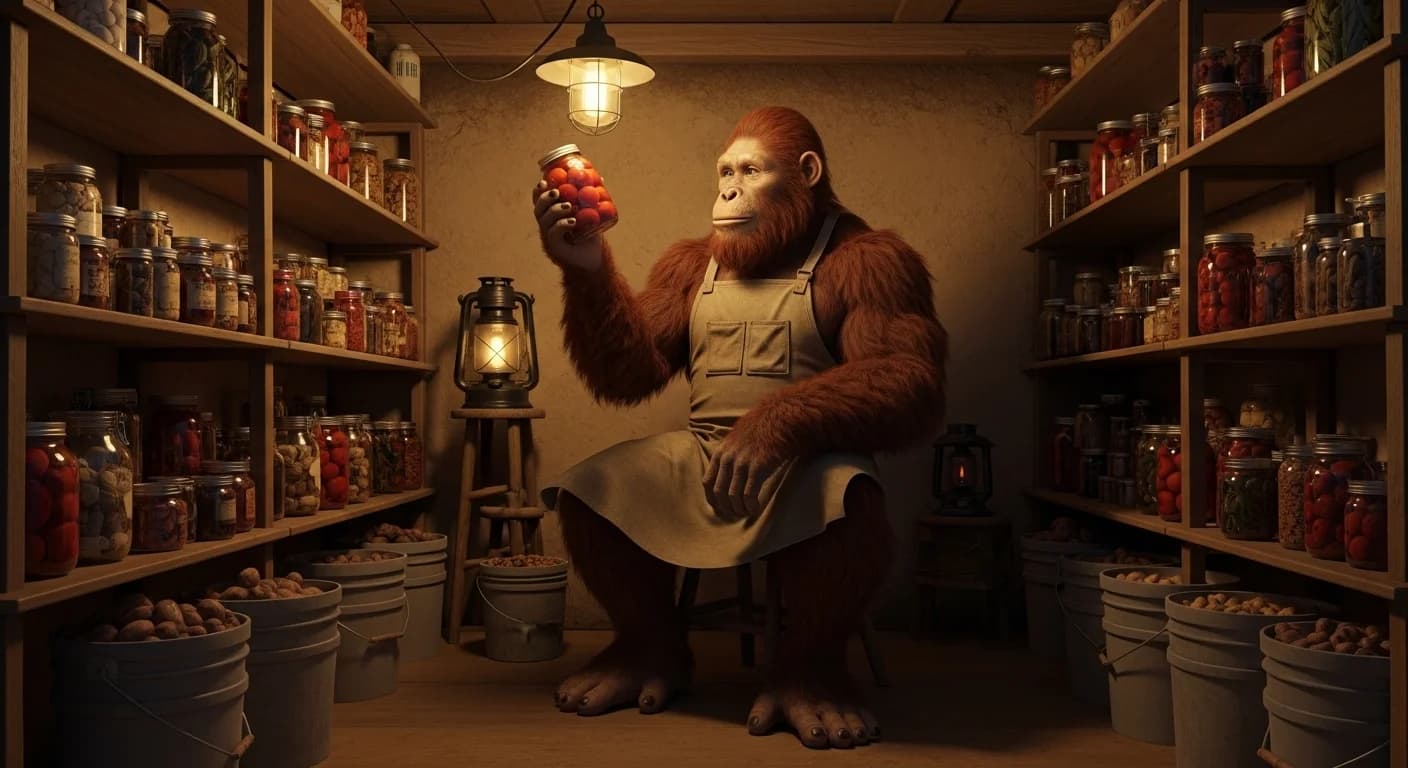
This article is an action plan, not a concept overview. It provides the exact quantities, the container specifications, and the week-by-week schedule for building a 90-day food stockpile for a family of four. Execute it as written. At the end of 12 weeks, the foundation foods are packed and sealed; the supplemental layer is in place; the rotation system is functional. The question of whether you have a 90-day food supply changes from "no" to "yes."
Every person I know who successfully built a 90-day food supply did not plan their way into it. They started, and the plan organized itself. The ones who got stuck in planning mode -- researching the best freeze-drying unit, debating the merit of different mylar thicknesses, comparing 18 brands of oxygen absorbers -- still have not started. Buy the rice. Pack the rice. The rest follows.
Table of Contents
- Step 0: Calculate your specific household target
- The complete 90-day quantity table (family of four baseline)
- Container specifications and what to buy
- The 12-week build schedule
- How to pack a 5-gallon mylar bucket: step-by-step
- The label system that makes rotation trackable
- The supplemental layer: beyond the dry staple foundation
- What to do after the 90-day supply is complete
- FAQ
Step 0: Calculate your specific household target
Before purchasing anything:
Caloric target per person: 2,000 calories per day x 90 days = 180,000 calories per adult. Children (6--12 years): 1,500 calories per day x 90 = 135,000 calories. Children (12--18 years): 2,000--2,200 calories per day x 90 = 180,000--198,000 calories.
Example household: 2 adults + 2 school-age children: 2 adults x 180,000 = 360,000 2 children x 135,000 = 270,000 Total: 630,000 calories
Scale the quantity table below by dividing household total ÷ 720,000 (the family-of-four-adults baseline) and multiplying each quantity by that ratio. For the household above: 630,000 ÷ 720,000 = 0.875. Multiply each quantity by 0.875.
Add 15--20% buffer: Food is lost in preparation, burned in higher-activity scenarios, and consumed as comfort food beyond strict need during stressful events. Plan for 115--120% of the calculated minimum.
The complete 90-day quantity table (family of four baseline)
Base: 4 adults x 2,000 cal/day x 90 days = 720,000 calories + 15% buffer = 828,000 calories stocked.
| Food | Quantity | Cal/lb | Total calories | # 5-gal buckets | Cost (est.) |
|---|---|---|---|---|---|
| White rice | 200 lbs | 1,647 | 329,400 | 6.5 buckets | $120--$160 |
| Dried pinto beans | 80 lbs | 1,556 | 124,480 | 2.7 buckets | $64--$96 |
| Red lentils | 40 lbs | 1,560 | 62,400 | 1.3 buckets | $36--$56 |
| Rolled oats | 80 lbs | 1,751 | 140,080 | 2.7 buckets | $40--$64 |
| All-purpose flour | 80 lbs | 1,651 | 132,080 | 2.7 buckets | $48--$72 |
| White sugar | 40 lbs | 1,748 | 69,920 | 1.3 buckets | $24--$36 |
| Refined coconut oil | 12 lbs | 3,860 | 46,320 | (in existing buckets / own containers) | $36--$60 |
| Salt | 20 lbs | -- | -- | (in existing buckets) | $8--$16 |
| FOUNDATION TOTALS | 552 lbs (food) | -- | ~904,680 cal | ~18 buckets | $376--$560 |
Supplemental additions (after foundation is complete):
- Canned protein (tuna/sardines/chicken): 48--60 cans = 1 flat per adult = $40--$80
- Spice kit (cumin, chili, turmeric, garlic powder, oregano, smoked paprika, cinnamon): $40--$70
- Baking supplies (baking soda, baking powder, vanilla): $15--$25
- Hot sauce and condiments: $20--$30
- Honey (2--4 lbs per adult): $30--$60
- Multivitamins (90-day supply): $25--$40
Container specifications and what to buy
Before purchasing food, purchase containers:
| Item | Quantity (family of 4) | Where to buy | Cost |
|---|---|---|---|
| 5-gallon HDPE food-grade buckets | 20 | Home Depot, Lowes, Uline, local bakeries (free) | $60--$120 |
| 5-gallon mylar bags (1-mil+ thickness) | 20 | Amazon (Wallaby brand), LDS Store online | $25--$40 |
| 2,500cc oxygen absorbers (bulk pack) | 1 pack of 50--100 | Amazon, LDS Store | $20--$35 |
| Gamma seal lids (for active-use buckets) | 4--6 | Amazon | $35--$70 |
| Standard bucket lids (for archive buckets) | 14--16 | From bucket suppliers | $14--$32 |
| Permanent markers for labeling | 2 | Any office store | $3--$5 |
Bakery bucket source: Many grocery store bakeries receive food-grade frosting and dough in 5-gallon buckets that they discard for free. Call ahead, identify yourself as wanting food-safe buckets, and pick up as many as available. They are food-grade (#2 HDPE), have been in food contact, and are free.
The 12-week build schedule
Week 1 -- Setup: Purchase containers. Purchase bung wrench or bucket lid opener if needed. Label 20 buckets. Calculate your household caloric target using the formula in Step 0. Adjust quantities if your household differs from the 4-adult baseline.
Week 2 -- Rice purchase 1: Purchase 100 lbs white rice (two 50-lb bags from Costco or Sam's Club). Pack 3 buckets using the guide below. Seal and label.
Week 3 -- Rice purchase 2 + beans: Purchase 100 lbs white rice + 40 lbs pinto beans. Pack 3 rice buckets and 1.3 bean buckets. Running total: ~247,000 calories.
Week 4 -- Beans + lentils: Purchase 40 lbs pinto beans + 40 lbs red lentils. Pack remaining bean buckets and 1.3 lentil buckets. Running total: ~374,000 calories.
Week 5 -- Oats: Purchase 80 lbs rolled oats. Pack 2.7 oat buckets. Running total: ~514,000 calories.
Week 6 -- Flour: Purchase 80 lbs all-purpose flour. Pack 2.7 flour buckets. Running total: ~646,000 calories.
Week 7 -- Sugar + salt: Purchase 40 lbs sugar + 20 lbs salt. Pack sugar in bucket with mylar (no oxygen absorbers -- sugar clumps). Pack salt without mylar (no oxygen absorbers). Running total: ~716,000 calories.
Week 8 -- Cooking oil + spice kit: Purchase 12 lbs refined coconut oil (several glass jars with tight lids). Purchase spice kit. Store oil separately in cool location (not in sealed mylar -- oil needs some air exchange to prevent rancidity). Running total: ~762,000 calories.
Week 9 -- Supplemental canned goods: Purchase 4 flats of canned protein (tuna, sardines, canned chicken -- 1 flat per adult in the household). Date-mark each can at purchase. Store in FIFO order.
Week 10 -- Baking supplies + honey: Purchase baking soda, baking powder, yeast (store yeast frozen in sealed jar), vanilla extract. Purchase honey (sealed glass jar; do not store in plastic long-term). Store with spice kit.
Week 11 -- Final supplemental: Purchase hot sauce, soy sauce, and condiment reserve. Multivitamins (90-day supply, in original sealed bottle). Any freeze-dried protein (chicken or beef) if budget permits.
Week 12 -- Inventory verification: Count all buckets: verify quantity and label accuracy. Press test each sealed mylar bucket: should be rock-hard (vacuum-tight). Any soft buckets were improperly sealed -- open, add new oxygen absorbers, re-seal. Verify canned good rotation order: oldest at front. Create a written inventory: what you have, how many days it covers, and the rotation date for each bucket.
What would solar look like for your home?
Refrigerator, freezer, dehumidifier — the infrastructure that keeps your stockpile safe requires properly sized solar backup. Get the free estimate.
SHOW ME MY SYSTEM →How to pack a 5-gallon mylar bucket: step-by-step
- Place the mylar bag inside the bucket -- let it drape over the sides, using the bucket as a form
- Fill with food -- up to 2 inches from the top of the bucket; loose-fill dry goods by pouring or using a clean scoop; do not compact to avoid damaging the bag
- Open the oxygen absorbers package -- work quickly; absorbers begin working immediately
- Drop 1--2 oxygen absorbers into the food -- use 2,500cc total for a 5-gallon bag of grain or legumes; can also use two 1,500cc packs
- Press out retained air -- fold the top of the mylar bag flat several times, pressing air out through the folds
- Heat-seal the bag -- use a household iron set to cotton/wool (or a flat iron or commercial sealer); press firmly across the full width of the bag top in a single pass; make a second parallel pass 1/4 inch above the first as insurance
- Test the seal -- press inward on the sides of the bag; if sealed correctly, the bag will resist compression firmly; if it flexes easily, the seal is incomplete -- re-seal the same area
- Close and label the bucket -- press the lid on firmly; write on the lid with permanent marker: FOOD TYPE, PACK DATE, ROTATION DATE (e.g., "WHITE RICE | PACKED: APR 2026 | ROTATE: APR 2051")
- Store in a cool, dark location -- not the garage (too hot/cold); not the attic; best: basement, interior closet, or purpose-built pantry room
Verification at 24 hours: The bucket should be noticeably harder than when packed. This is the oxygen absorbers completing their work. A properly packed 30-lb bucket of rice should feel like a solid, slightly compressed block. If still soft after 24 hours, the seal is incomplete.
The label system that makes rotation trackable
Every bucket label contains:
- Contents: "White Rice" or "Pinto Beans" -- specific, not vague
- Pack date: "April 2026" -- month and year
- Target rotation date: For white rice, "April 2051"; for oats, "April 2036"; for beans, "April 2046"
- Bucket number: "Bucket 1 of 6" (rice), "Bucket 1 of 3" (beans) -- allows progressive use in order
Every can label: write purchase month and year on the lid with a permanent marker at time of purchase.
Rotation system: Active rotation layer (canned goods, open buckets) on front shelves. Archive layer (sealed mylar buckets) on back shelves or lower racks. New purchases always go to the back. Oldest always consumed first.
The supplemental layer: beyond the dry staple foundation
The dry staple foundation provides calories, protein, and carbohydrates. The supplemental layer adds:
Canned protein: Tuna in water (canned), wild-caught sardines in olive oil, canned chicken or turkey, canned salmon. These provide complete protein with palatability that beans alone cannot match at every meal. Budget: $80--$120 for a 90-day supplemental protein layer for a family of four.
Freeze-dried protein: Freeze-dried chicken, beef, or eggs for use when cooking time is limited or when pantry variety is needed. More expensive per serving but 25-year shelf life and excellent palatability. Budget: $100--$300 for a meaningful supplemental freeze-dried protein layer.
Vitamin and mineral supplementation: A 90-day diet of primarily rice, beans, and oats is low in fat-soluble vitamins (A, D, K), vitamin C, and micronutrient variety. A daily multivitamin ($0.05--$0.10/day) bridges the nutritional gap that a stored staple diet creates. Budget: $15--$30 for a 90-day supply.
What to do after the 90-day supply is complete
Month 4 and beyond -- expand and improve: The 90-day supply is the foundation. Once it is in place and verified, the next phase is improvement:
- Extend to 120 days -- purchase an additional 25% of each quantity, using the same process
- Add freeze-dried supplemental -- improve palatability for extended deployment
- Build the water layer -- if not already complete, two 55-gallon water drums and a gravity filter
- Develop preservation skills -- begin the fermentation and dehydration sequence
- Start the garden production layer -- even a 100 sq ft calorie crop garden contributes meaningfully
What would solar look like for your home?
A properly sized solar battery bank protects refrigeration, freezer, and all preservation equipment. Calculate yours.
SHOW ME MY SYSTEM →FAQ
How do I know if a sealed bucket has maintained its seal after years of storage?
The press test: press firmly on the sides of the bucket. A properly sealed bucket with an intact mylar bag will feel hard and resist compression. The sealed mylar bag inside acts as a vacuum bag -- the food is compressed against the bag walls. If the bucket feels hollow or the sides flex easily, the mylar bag may have lost its seal. Open it, inspect the food, and repack with new mylar and new oxygen absorbers if anything seems off. Annual inspection of one representative bucket from each food type is the recommended maintenance schedule.
Can I store the buckets in a cold garage through winter?
Freeze-thaw cycling stresses container seals and can affect food texture in some items. More significantly, garages in cold climates may reach temperatures below 32°F in winter and above 90°F in summer -- a 60-degree annual range. Dry stored food handles cold well (freezing temperatures do not harm sealed dry grains and beans) but the repeated cycling between extremes is not ideal for maximum shelf life. A conditioned basement, interior pantry, or temperaturecontrolled storage area is preferable. If the garage is the only available space, insulating the storage area within the garage (a small insulated utility room or closet) moderates the temperature swing significantly.
The answer is 12 weeks
Not 12 years of careful planning. Not waiting for the right moment or the right budget or the right emergency to stop procrastinating.
Twelve weeks. Twenty buckets. The complete list above. The 12-week schedule executed as written.
At week 12, the question changes: you are no longer a household that does not have a 90-day food supply. You are a household that does.
Start with Week 1. Purchase the containers. The food comes next.